
Healthy, resilient forests are important to water quality and ecosystem health throughout the Chesapeake Bay watershed. Forests face multiple stressors, including invasive species, insect pests, disease, deer, and changing environmental conditions. These pressures interact with past disturbance and inadequate management, while forest loss and fragmentation make conservation more difficult. The report also identifies limited funding, technical assistance, and markets for low-grade wood as barriers to managing forests at the scale needed.
This report summarizes the February 2026 STAC workshop, where researchers, practitioners, and decision-makers discussed how forest stressors affect resilience and water quality, and identified near-term actions and longer-term needs. Recommendations address communication, forestry networks, policy, forest product markets, workforce and technical capacity, funding, research, and land management. The report emphasizes active, landscape-scale management, including sustained maintenance and invasive species control, to help forests better withstand stressors that cannot be controlled.
Workshop webpage with related materials, including Conserving Healthy Forests_Key Findings and Recommendations from the STAC Workshop, a two-page summary of the workshop’s main findings and recommendations.
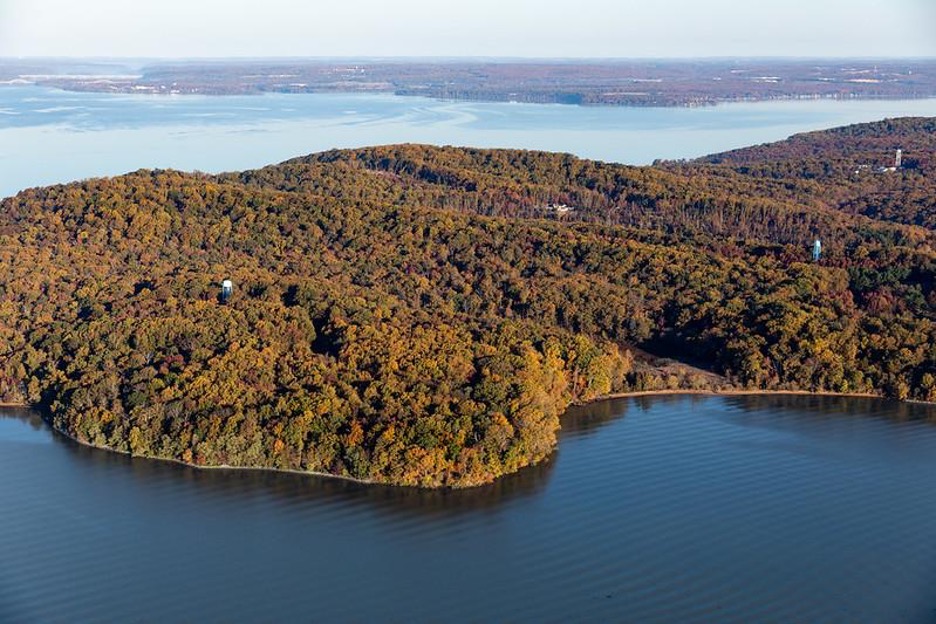
Image: Photograph by Will Parson/Chesapeake Bay Program with aerial support by Southwings.
Suggested Citation:
Brownson, K., C. Highfield, M. Baker, A. Freitag, C. Hayes, S. Johnson, M. Katoski, A. Muth, and M. Noe Fellows. 2026. Healthy Forests: Proactive Strategies for Managing Threats and Promoting Conservation in the Chesapeake Bay Watershed. STAC Publication Number 26-007, Edgewater, MD. 73 pp.