
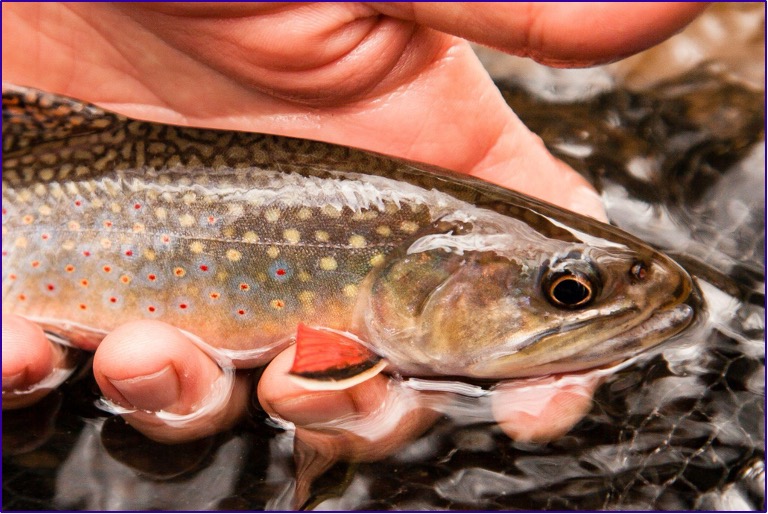
Brook trout are an iconic coldwater species with ecological, cultural, and recreational importance across the Chesapeake Bay watershed. However, populations have declined from their historic range as warming stream temperatures, habitat fragmentation, land use change, acid mine drainage, degraded riparian corridors, and passage barriers continue to affect occupancy, abundance, and resilience. Although many agencies, counties, conservation districts, and nonprofit partners are already working to address these stressors, restoration efforts are often spread across jurisdictions, funding programs, and landownership patterns. A more coordinated approach is needed to help partners target projects where they are most likely to benefit stronghold and persistent brook trout patches.
This report summarizes two parallel STAC workshops held in DuBois, Pennsylvania and Westminster, Maryland, which convened federal, state, county, and NGO partners working in Clearfield, Potter, Garrett, Carroll, and Baltimore counties. The workshops reviewed existing programs, funding mechanisms, mapping tools, and restoration opportunities, then used facilitated discussions to identify how partners can better coordinate project identification, prioritization, landowner outreach, funding, implementation, tracking, and monitoring. Recommendations focus on formalizing a Chesapeake Bay Brook Trout Collaborative, creating a dedicated restoration coordinator role, improving communication among partners, developing a GIS-driven prioritization framework, building a fundable project pipeline, and strengthening long-term tracking and monitoring of brook trout restoration outcomes.
Workshop webpage with related materials.
Suggested Citation:
Goetz, D., K. Ombalski, K. Brittingham, K. Brownson, M. Cole, J. Glace, B. Harris, G. Hunt, S. Knoche, L. Maloney, M. Masser, B. Michael, L. Cattell Noll, M. Ramsey, S. Rummel, N. Staten, K. Williams, and A. Wolfe. 2026. Blueprint for Building Partnerships and Recommendations for Scaling Brook Trout Restoration in Stronghold and Persistent Patches. STAC Publication Number 26-003, Edgewater, MD. 64 pp.