
The Chesapeake Bay Program relies on long-term tidal monitoring data to assess water quality, track restoration progress, and evaluate habitat conditions across the Bay. However, existing monitoring approaches can miss important spatial and temporal variation affecting SAV, dissolved oxygen, chlorophyll a, and other living resource needs.
This report summarizes a three-part STAC virtual workshop series focused on advanced monitoring and assessment approaches for the next generation Chesapeake Bay tidal monitoring program. Sessions addressed SAV and habitat characterization, water clarity and chlorophyll a, and dissolved oxygen. The report synthesizes discussions on adaptive monitoring design, alternative data sources such as satellite-derived products and citizen science observations, improved assessment tools, and cost-effective strategies to better support management decisions across tidal habitats.
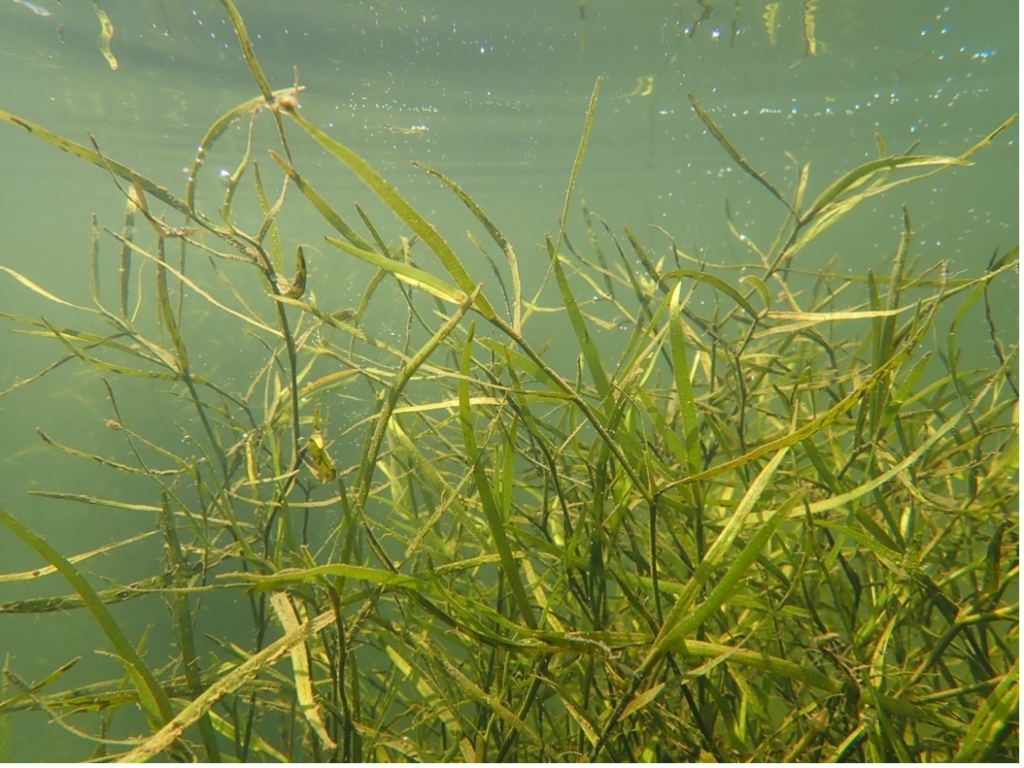
Image: Brooke Landry, Maryland DNR. Heteranthera dubia in clear water on the Potomac River, 2019.
Suggested Citation:
Tango, P.J., B. Landry, T. M. Trice, B. Sullivan, T. Robertson, and B. Dennison. 2026. Advancing Monitoring Approaches to Enhance Tidal Chesapeake Bay Habitat Assessment for Submerged Aquatic Vegetation, Water Clarity, Chlorophyll a and Dissolved Oxygen. STAC Publication Number 26-002, Edgewater, MD. 91 pp.