
The Chesapeake Bay Program (CBP) partnership has made major gains in reducing atmospheric nitrogen loads to the Bay, largely through Clean Air Act–driven declines in nitrogen oxides (NOx). However, ammonia emissions (primarily from agricultural sources) have increased over time, and are expected to represent a growing share of atmospheric nitrogen deposition to the Chesapeake Bay and its tributaries, with additional concerns for local water quality and sensitive freshwater species. To help ensure Bay modeling and mitigation strategies keep pace with this shifting emissions landscape, STAC convened a virtual mini-workshop series on improving modeling and decision support for poultry ammonia emissions across the watershed, culminating in a final synthesis session. Across sessions held from November 2021 through May 2022, participants reviewed key decision points for the Partnership, examined the effectiveness and real-world feasibility of management practices, explored CMAQ apportionment results, identified critical knowledge gaps, and discussed priorities and next steps. The resulting report recaps the series and outlines practical considerations for strengthening ammonia emissions and deposition estimates (given known limitations in underlying datasets and emission factors) so that CBP partners can more confidently evaluate mitigation options and support restoration outcomes.
Please visit the final workshop session webpage for links to earlier session and related materials.
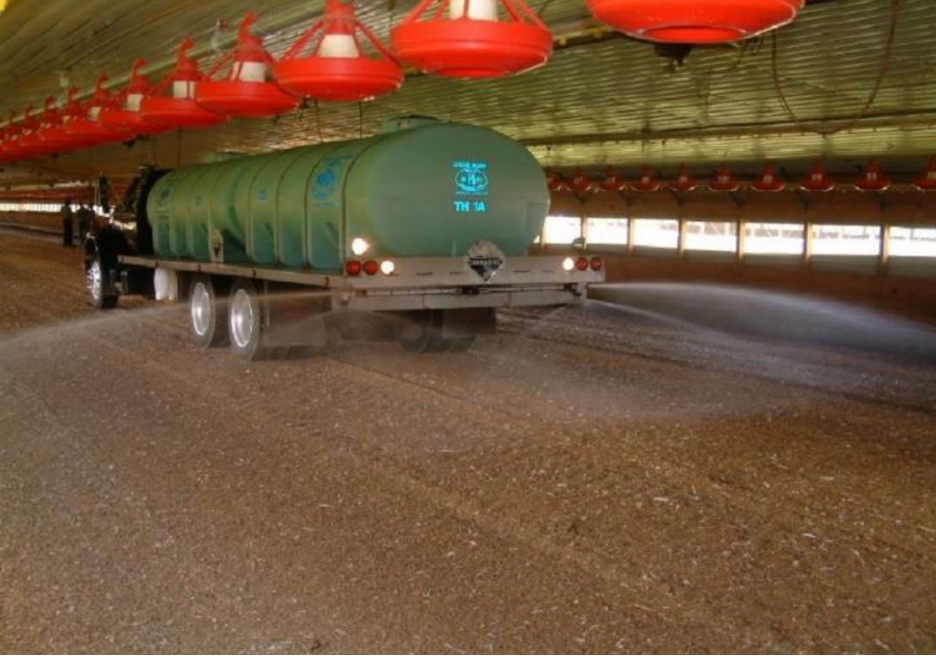
Image: NRCS Practice Code 591: Amendments for the treatment of agricultural waste is the treatment of manure, process wastewater, stormwater runoff from lots or other high intensity areas, and other wastes with chemical or biological additives. Source: NRCS Tennessee.
Note: This report was amended in June 2026 to incorporate additional steering committee and participant feedback received following publication. Revisions included updates to authorship information, clarification of technical content, expanded summaries of workshop presentations and discussion outcomes, and correction of minor editorial errors. The amended version is intended to more accurately reflect information presented and discussed during the workshop.
Suggested Citation:
Wood, J., K. Boomer, J. Bash, P. Bredwell, M. Dubin, H. Li, H. Porter, and S. Shah. 2026. Improving Modeling and Mitigation Strategies for Poultry Ammonia Emissions Across the Chesapeake Bay Watershed. STAC Publication Number 26-001, Edgewater, MD. 82 pp.